The Parking Lot Inspection: How to Buy Used Glass From People Who Have No Idea What They're Selling

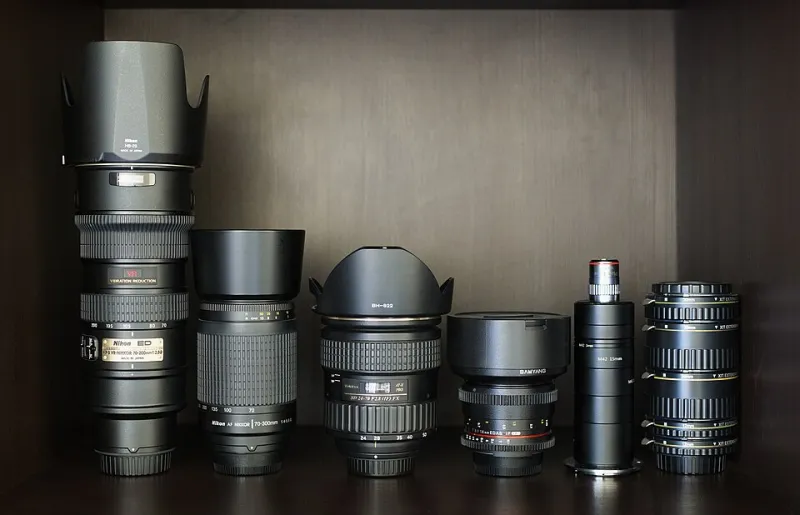
Photo: Shixart1985, CC BY 2.0, via Wikimedia Commons
The Best Deals Come From People Who Don't Care
The used market has two kinds of sellers. The first is a photographer who knows exactly what a 70-200 f/2.8 is worth, checks completed eBay listings before pricing theirs, and will meet you at a FedEx parking lot with the lens in a padded case and a story about 'baby on the way, need the cash.' You will not get a deal from this person. You'll get eBay minus 10%.
The second kind of seller is the one I hunt for: the estate sale organizer, the divorced guy selling 'the camera stuff,' the mom in the suburbs listing her late father's binoculars for $40 because a similar-looking pair on Amazon costs $60. These people don't know what mold looks like on a rear element. They don't know that 'a little haze' is a sentence that should end a negotiation. They just want the stuff gone.
That's not exploitative — it's the free market doing what estate lawyers can't. But it means you need to be the expert in every transaction, because nobody else in that driveway is.
The Five-Minute Parking Lot Routine
I've refined this down to a checklist I can run before the seller finishes their second cup of gas-station coffee. Bring a flashlight — your phone's works fine — and a body to mount the lens on if it's a mount you shoot.
1. The flashlight sweep. Shine light through the lens front-to-back at an angle, then straight on. You're looking for two different things. Haze is a uniform fog, like breath on glass — sometimes it's just oil fogging, sometimes it's fungus cleanup gone wrong. Fungus looks like snowflakes, spiderwebs, or tiny branches growing in from the edge of the element. Fungus is a walk-away. It etches glass permanently and it spreads to your other lenses if you store gear together.
2. The aperture click test (DSLR-era glass). Set the aperture ring or lever and fire it. It should snap, not drift. A lazy, oily-sounding blade means the lubricant has migrated — common on old Pentax and Minolta glass, and it means a $100 CLA on a $60 lens.
3. The focus ring drag. Smooth through the whole travel. Gritty means sand or impact damage. Sloppy with play means the helicoid is worn. Either one is a pass unless the price is basically free.
4. Mount it. If you brought a body, this takes thirty seconds and catches the stuff photos hide: a bent aperture lever, a detached rear element group (gently shake it — a rattle is a red flag), or decemented elements that only show as a weird crescent flare at certain angles.
5. The bino version. For binoculars, check collimation first: focus on a distant sign or a branch. If you can't merge the two circles comfortably after ten seconds of adjustment, the prisms have been knocked out of alignment and it's a factory job to fix. Then check for the same fungus rules, and rock the eyepieces — bridge flex on old porros is common and mostly cosmetic, but a wobbly eyepiece is not.
What the Listings Won't Tell You
'Just needs a cleaning' means the seller opened it. 'Selling for a friend' means they can't answer a single question about it, which is fine — inspect harder. 'Vintage' means nothing except that the price should reflect that coatings from the 1960s are a different experience than modern multicoating.
And the big one: delamination. Look for rainbow-colored edges along the cemented lines inside doublet elements, usually visible from the side at an angle. It looks almost pretty. It's not. It's the glue failing, it doesn't stop, and no one can fix it economically.
The Scoreboard: Five Deals, Reviewed Honestly
Win #1 — Nikon 105mm f/2.5 AI, $180. Garage sale in a Denver suburb. Seller's grandfather was 'into birds and stuff.' Flashlight sweep clean, blades snappy, focus like butter. It's now the lens I reach for more than anything with a badge made this decade.
Win #2 — Nikon Monarch 8x42s, $90. Marketplace listing titled 'binoculars heavy duty.' Slight bridge wobble, otherwise perfect. Retail on those is north of $400. The seller was thrilled someone was giving them a good home; I was thrilled I didn't have to tell them.
Win #3 — Pentax SMC 50mm f/1.7, $25. The classic. Every photographer should own one of these finds. Slight oil on blades, which I knew about before buying, and it's never once mattered in practice.
Loss #1 — 'Canon zoom lens' for $150. Met in a Target lot. Didn't mount it because I didn't have the right adapter with me. Got home: the aperture was stuck wide open and the rear element had a hairline crack hiding under the black paint of the barrel. Lesson: bring the body or bring the walk-away discipline. I had neither.
Loss #2 — Vintage 7x50 binoculars, $60. Looked gorgeous. Tested collimation in the driveway against a telephone pole and — this is the embarrassing part — I rushed it. At home, against a proper distant target, the images wouldn't merge. Factory service would've cost triple what I paid. It now lives in my closet as a $60 reminder.
Rules I Actually Follow Now
- Cash in person, public place, no exceptions. Zelle a stranger for a lens you haven't inspected and you've donated to a random person.
- Bring the mount. A $15 vintage adapter in your glovebox pays for itself the first time it saves you from a dud.
- Price everything against eBay sold listings before you leave the house — but remember the seller probably didn't, which is the whole point.
- Be willing to walk. There is always another garage sale next Saturday. There is not always another $200 of your budget.
The used market rewards patience and punishes enthusiasm, which is a hard combo for gear people. Run the checklist, trust the flashlight, and accept that roughly two out of five deals will go sideways. The other three more than cover it.