Thirty Bucks of Glass: My Month Shooting a Beat-Up Vintage 50mm on a Modern Mirrorless Body
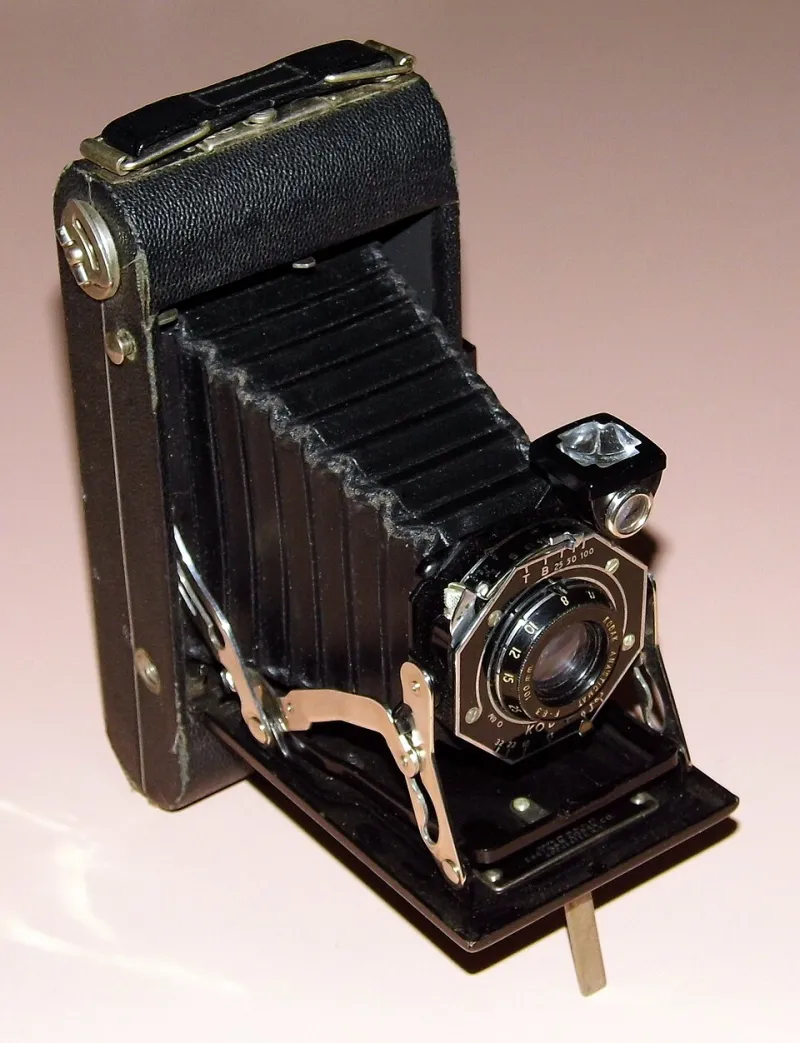
Photo: Joe Haupt from USA, CC BY-SA 2.0, via Wikimedia Commons
There's a certain romance to buying a lens that's older than your parents. Mine came from a flea market in Portland — a dusty 50mm f/1.7, probably mid-70s vintage, sitting in a bin next to VHS tapes and a fondue set. Thirty bucks, cash. The guy threw in a cracked UV filter I immediately trashed.
The question I wanted to answer wasn't "is this lens charming?" It was "does old glass actually hold up on a 2025 mirrorless body, or is the vintage hype mostly nostalgia and bokeh Instagram posts?"
So I ran it through a month of real shooting — street photography in Chicago, landscapes on a road trip through the Badlands, some low-light indoor work — and put it head-to-head against a modern 50mm prime that costs roughly 30x more.
The Setup
The test body was a 24MP mirrorless camera with an adapter for the vintage mount. Focus peaking and magnification made manual focusing manageable, though it took a solid week before I stopped hunting focus on moving subjects.
For comparison, I shot the same scenes with a modern 50mm f/1.8 — the kind of sharp, fast-focusing lens every review site praises. I also ran resolution charts on a tripod at f/2.8, f/5.6, and f/8, because feelings are nice, but charts don't lie.
Where the Old Lens Genuinely Wins
Rendering. This is the big one, and it's real. The vintage 50mm has that swirly, slightly unhinged bokeh that modern lenses spend millions in R&D trying to eliminate. Tree branches behind your subject? They melt. City lights at night? Big soft orbs with a hint of edge smear that looks intentional even when it isn't.
Build quality. Metal barrel, damped focus ring, a satisfying click on the aperture ring. The modern lens feels like a well-made plastic product. The vintage lens feels like a tool.
Price per character. Thirty dollars for images that get compliments? That's the best value in photography, period.
Where It Falls Apart (And the Vintage Crowd Won't Tell You)
Wide open is a suggestion, not a promise. At f/1.7, the corners turn to soup. Not artistic soup — just soft, low-contrast mush. By f/4 it cleans up nicely, but if you're buying vintage expecting sharpness at max aperture, you'll be disappointed.
Chromatic aberration is everywhere. Purple fringing on backlit edges, especially shot wide open. Fixable in Lightroom in about ten seconds, but it's there, constantly.
Flare. Old coatings can't fight a sunrise. Shooting into the sun produced veiling flare that washed out half the frame. Sometimes that looks cool. Often it just looks bad.
Manual focus means missed shots. Full stop. I lost dozens of frames of my nephew's soccer game because a 1970s focus ring and a fast-moving eight-year-old are natural enemies. If you shoot kids, pets, or sports, vintage glass is the wrong tool.
The Chart Results
On the tripod, center sharpness at f/5.6 was about 80% of the modern lens — genuinely impressive for the money. Corners at the same aperture? Around 45%. The modern prime also held its performance across the frame wide open, while the vintage lens needed to be stopped down two stops just to become respectable.
Translation: for tripod landscapes and patient portraits, the gap is smaller than the price suggests. For anything that moves, it's a canyon.
The Verdict
Old optics absolutely hold up in 2025 — for a specific kind of shooter. If you're a hobbyist with a mirrorless body, some patience, and a taste for character over clinical perfection, a $30 vintage prime is the cheapest photography lesson you'll ever buy. It'll teach you to slow down, nail your focus, and think about light.
But don't let anyone tell you it replaces a modern lens. It doesn't. It complements one.
Buy it if: you shoot still subjects, love the manual process, and want maximum character per dollar.
Skip it if: you need autofocus, shoot in tricky light, or pixel-peep corners.
Me? The vintage 50mm lives in my bag next to the modern one. Different jobs, different days. Thirty bucks well spent.