The $400 Wedding Kit: What a Weekend of Rentals Actually Bought Me (and Where My Crummy Old Gear Did Fine)
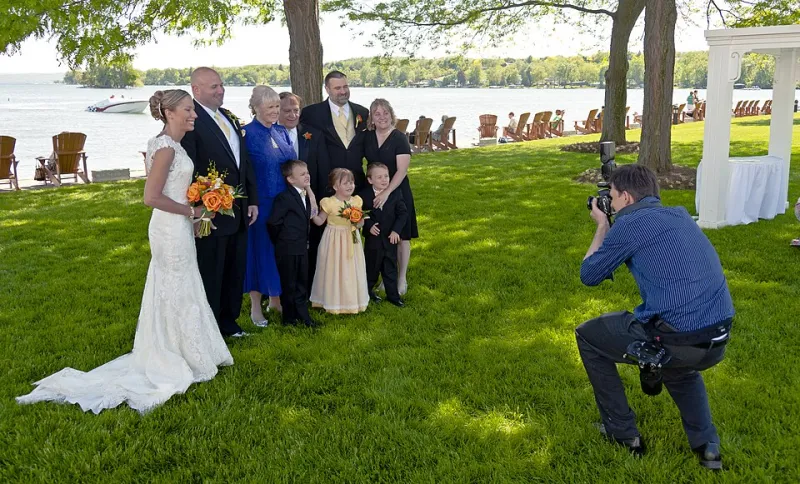
Photo: Daniel Case, CC BY-SA 3.0, via Wikimedia Commons
A cousin's wedding in Ohio. No second shooter, no budget for one, and a bride who mentioned — casually, over Thanksgiving — that she'd seen my Instagram and figured I could "do the pictures." I shoot on a two-year-old mirrorless body and a 24-105 f/4 that's been dropped twice. Good enough for birthdays. Maybe not good enough for the one day nobody gets a redo.
So I did the math both ways. Buying a legit wedding kit — second body, two fast zooms, flashes — runs north of $5,000 even used. Renting the same thing from a lens rental house with a Midwest warehouse ran me just under $400 for a Thursday-to-Monday window. I took the rental. Then I spent the wedding quietly auditing my own decision, shot by shot, because that's what we do here.
What the Rental Money Actually Bought
The second body, no contest. This was the single best $90 of the rental. My old camera became the 35mm-on-strap machine while the rental body wore the 70-200. When the vows happened, I wasn't swapping lenses in a hurry — I was just turning my head. If you take one thing from this piece, take that: the two-body thing isn't a pro flex, it's insurance.
The 70-200 f/2.8 during the ceremony. The church was dim and the officiant had opinions about photographers approaching the altar. The f/2.8 at 135mm, ISO 6400, cleaned up fine in post. My f/4 kit lens would have forced ISO 12800 and it would've shown.
The flash kit at the reception. Two rented speedlights on cheap stands in the corner of a VFW hall turned a dark room full of dancing into something that looked intentional. Without them, every dance floor shot is a blurry orange apology. This is where rental money buys the most visible improvement per dollar.
Where My Cheap Gear Did Just Fine
Here's the part the rental counter won't tell you: a lot of the day didn't need any of it.
Getting-ready shots? Natural window light, 50mm, my own glass. Nobody could tell. Details — rings, invitations, the cake table — shot fine on the f/4. The cocktail hour, outdoors, golden hour, all my stuff. I counted it up afterward: roughly 60% of my keepers came from the consumer kit.
Also worth noting: the rented 24-70 f/2.8 spent most of the day in the bag. It's a great lens and I felt very professional carrying it, but "professional feeling" doesn't show up in a file. If I'd only rented the body, the 70-200, and two flashes, I'd have saved about $130.
The Hidden Costs Nobody Puts on the Invoice
- Insurance. The rental house required it. $35 through a short-term policy. Budget for this.
- Shipping both ways. Another $40 with proper padding, because I wasn't trusting a soft bag to FedEx.
- The learning curve. Different bodies mean different button layouts. I fumbled the first ten minutes of the first look. If you rent, the gear arrives Thursday for a reason — shoot with it Thursday.
Real total: about $475 all-in. Still a rounding error next to buying.
So — Rent, Buy, or Upgrade?
Rent when: the job is one-off or rare (a wedding a year, a paid portrait weekend), the gap is about speed and light (fast glass, flashes, second body), and the client is paying you something. Renting $400 of kit against a $1,500 fee is just cost of goods.
Buy when: the need repeats. Two weddings a year and the rental math starts tilting toward a used body and one fast prime. Three-plus, stop renting, start owning.
Upgrade when: neither applies. If you shoot your own life — travel, kids, weekends — more than you shoot jobs, put $400 toward the thing you use every day instead of a rental for a thing you'll use once.
The Verdict
The rental saved this wedding. The ceremony files and the reception lighting were genuinely beyond my own kit, and I'd have been quietly embarrassed without them. But I over-rented. Half the day ran on gear I already owned, and the 24-70 was mostly ballast with a nice red ring.
For the occasional pro-adjacent shooter — the friend, the cousin, the side-hustler with one job on the calendar — rent the lighting, rent the reach, rent the second body. Skip the rest. And whatever you do, don't buy the kit for one Saturday. That's not an investment; that's a very expensive way to fill a drawer.