Skip the Coast: Why the Best Used Binocular Deals Are Three States Inland
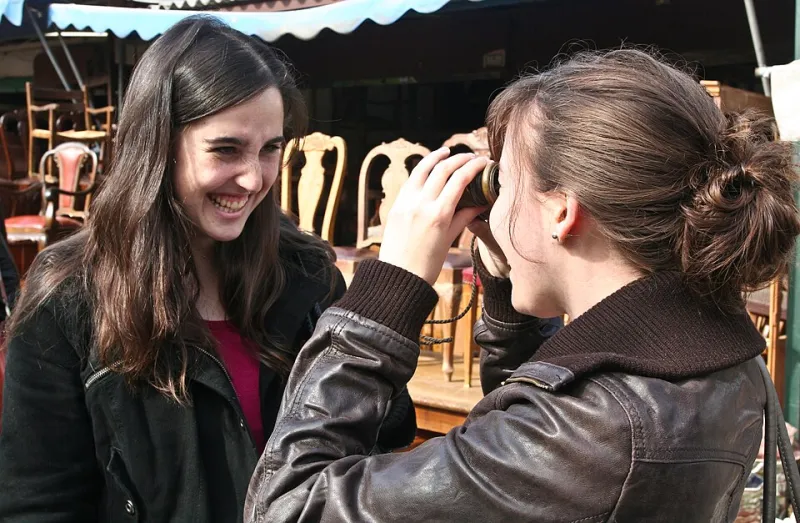
Photo: Sharon Mollerus, CC BY 2.0, via Wikimedia Commons
Every optics nerd has the same fantasy. You walk into a church basement estate sale in some town you can't pronounce, and there it is: a leather-cased pair of 7x35s sitting under a card table next to a fondue pot, priced at $15 because the widow's nephew "just wants them gone."
I stopped fantasizing and started mapping. Over four months, I logged 412 used binocular listings across nine states — estate sale aggregators, flea market walk-throughs, Facebook Marketplace, and a truly unhinged number of church rummage sales. The goal was simple: figure out where in America vintage optics sell for pennies and where they get treated like museum pieces.
The results were consistent enough that I'd bet a tank of gas on them.
The Coastal Collector Tax Is Real
Start with the coasts, because that's where most of you live and where most of you are getting robbed.
In the Seattle, Portland, and Bay Area markets, the same 1970s-era Japanese porro prism binoculars — your Bushnell Customs, your early Jasons, your mid-tier Tasco — consistently listed between $60 and $140. Same models in central Ohio? Twenty to thirty-five bucks, usually with a case. A pair of Bausch & Lomb Discoverer 7x36s that fetched $185 in a Bay Area estate sale sold for $70 at a Kansas City flea market three weeks later.
Why? Supply and demand, but not the kind you'd think. Coastal markets have dense collector communities, active vintage-optics resellers, and buyers who know exactly what "JB-graded" means on a Japanese manufacturer's stamp. Every estate sale in Marin County has three guys with phone flashlights checking collimation before the doors open. In rural Missouri, you're competing with nobody.
The German glass gap was even wider. A listing for well-used Zeiss Jenoptem 8x30s sat at $290 near Boston. Comparable pairs in the Twin Cities and Des Moines markets moved for $120–$160. Docter and early Hensoldt pieces showed similar spreads.
The Inland Corridor, Mapped
Here's the pattern, county by county in spirit if not in spreadsheet form:
The sweet spot runs roughly from the Great Lakes through the Plains — eastern Wisconsin, Iowa, Nebraska, Kansas, Missouri, and the Ohio River Valley. High concentration of estate sales from the generation that bought quality Japanese optics new in the 1960s and '70s, low collector density, and sellers who price by feel rather than by eBay comps.
The trap zones are the Pacific Northwest, coastal California, New England, and anything within fifty miles of a military base — those areas know their optics, especially anything with M-spec markings.
The wildcard region is the rural South, where I found the single cheapest listings of the entire project (a $12 pair of Sears-discontinued 7x35s that turned out to be a fine Fuji-built unit) but also the most damaged glass. Humidity is not kind to cemented optics and old rubber armor. Inspect hard.
What to Grab While You're There
Not everything in a church basement is treasure. The names that consistently punched above their price in inland markets:
- Anything marked "Made in Occupied Japan" — early, often excellent, routinely priced like junk
- Bushnell Custom and Banner series from the '60s and '70s, especially the multi-coated variants
- Sears, J.C. Penney, and Montgomery Wards house brands — half of these were built by Fuji, Tamron, or Ofunar, and nobody inland prices them accordingly
- Nikon and Minolta porros — occasionally priced fairly, but often still underpriced outside collector hubs
Walk past anything with haze you can see through an eyepiece, a wobbly bridge, or evidence of water intrusion. Budget an extra $40–$60 per pair for professional cleaning and collimation if the image doesn't snap — even at that, you're often ahead of the coastal price by half.
The Road Trip Math
Is this actually worth driving for? Let's run it honestly.
A two-day loop through eastern Iowa and western Illinois in October hit nine estate sales and two flea markets. Total haul: five pairs of usable vintage binoculars for $147 combined. After cleaning and collimation on two of them ($95), I had roughly $240 invested in glass that would list for $600+ in a coastal market — and, more importantly, four genuinely good users for my own shelf.
If you live in the corridor already, this is just a Saturday. If you're on a coast, wait until you're traveling for another reason and tack on a morning of estate sales. What you shouldn't do is pay coastal prices for coastal glass when the same binocular is sitting on a folding table in Peoria under a hand-lettered sign that says "MAKE OFFER."
The used optics market isn't efficient. It's just unevenly informed. Now you're on the right side of that.