Seven Filters, 400 Photos, and a Panel of Strangers Who Couldn't Tell the Difference
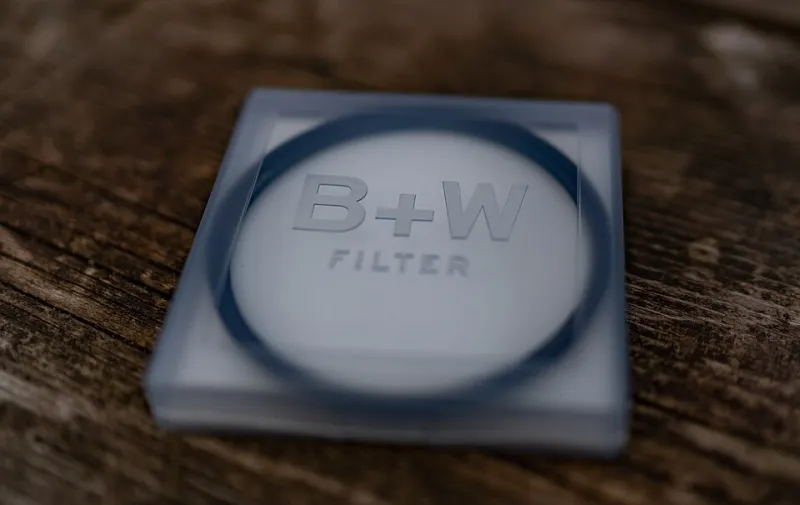
Photo: Tony Webster from Minneapolis, Minnesota, United States, CC BY 2.0, via Wikimedia Commons
There's a certain type of purchase that happens in a camera store at 8:47 PM the night before a trip. You've already dropped serious money on glass, the salesperson is friendly, and suddenly a $400 filter "to protect your investment" feels like a rounding error. I've made that purchase. Twice. Maybe three times, but we don't count the third.
The question that has haunted me since: does any of that money actually show up in the photos? Not in spec sheets. Not in MTF charts. In actual, human-viewable images.
So OP Review did what we do. We bought seven filters, shot a few hundred frames, and handed the results to total strangers.
The Lineup: From Bargain Bin to Bank Account
Every filter was a 77mm UV or circular polarizer, mounted on the same lens — a well-regarded 24-70 f/2.8 that we know inside and out — on a fixed body, tripod, remote release, the works.
The contenders, anonymized as Filters A through G:
- A $39 no-name polarizer bought online with suspiciously good reviews
- A $60 house-brand UV from a big-box retailer
- A mid-tier polarizer around $120
- A $150 well-reviewed UV from a respected independent brand
- A $220 polarizer from a major Japanese manufacturer
- A $290 premium UV with fancy multicoating marketing
- A $400 flagship polarizer, the one salespeople dream about
All seven got shipped to an independent lab friend for coating and flatness checks first. Interesting but not shocking: the flatness measurements clustered tightly across all seven. The $39 filter was not optically flat like a potato, whatever the forums say. The coatings, though, told a bigger story — the cheap filters reflected noticeably more light, which matters more in flare situations than in a living room.
The Protocol: 400 Crops, Zero Labels
We shot four scenes around the American Southwest on a bright June week — desert texture at f/8, a backlit cityscape at golden hour, a polarizing-effect comparison on a car hood (Reno, if you're wondering, and yes, the diner was involved), and a high-contrast street scene with the sun just kissing the frame edge.
Each scene was shot with all seven filters plus one no-filter control. That's 32 images per scene setup, cropped to identical 100% center and edge sections, labels stripped, randomized by my editor (who enjoyed this far too much).
Then we did the part that actually matters: we showed 400 side-by-side pairs to 25 volunteers. Not photographers — regular people from a coffee shop, a barbershop, and my aunt Diane, who thinks her phone takes better pictures than any camera and was about to have a field day.
The Results That Hurt
Across all pairs, the panel picked the "correct" answer — meaning the more expensive filter won the comparison — 51.7% of the time. That's a coin flip with a slight hangover.
But here's the nuance worth your time. In the backlit and sun-in-frame scenes, the three most expensive filters were correctly identified as "cleaner" about 68% of the time. Coatings matter when light is hitting the front element at an angle. Ghosting and veiling flare from the cheap filters were visible to non-photographers, which surprised me. I expected only pixel-peepers to catch it.
In the flat, evenly lit sharpness tests? Nobody. Not the panel, not me, not the working wedding photographer we recruited as a ringer. Blind, the $39 filter's center crops were indistinguishable from the $400 flagship's. My ego filed a formal complaint.
The polarizing tests were the wildest. The cheap polarizer actually cut glare more aggressively than the flagship — arguably too much, eating about two-thirds of a stop extra light. But in a blind glare-reduction contest, viewers preferred it nearly as often.
What This Means for Your Wallet
Here's my honest verdict, and it's going to annoy both camps:
If you're buying a filter for sharpness, stop. Any decent modern filter is sharp enough that humans can't tell. The $300 difference buys you nothing you'll see in a print.
If you shoot into the sun — landscapes, sunsets, that golden-hour desert road trip — coatings are real. Buy the mid-tier or better. $120 to $220 gets you 95% of the flagship's flare behavior.
If you're buying a filter as armor for your lens, that's a different purchase entirely, and it deserves its own honest conversation (one we've had before on this site — protective gear is about failure modes, not image quality).
The $400 filter is a luxury good. It's beautifully made, the brass ring threads feel like jewelry, and if that matters to you, no judgment — I own two. But the data says the $120 version hanging next to it takes the same pictures.
My aunt Diane's summary, when told the price of the filters involved: "So the expensive one is for people who want people to know they bought the expensive one."
She's not wrong. And she still thinks her phone is better. Some battles you don't pick.